
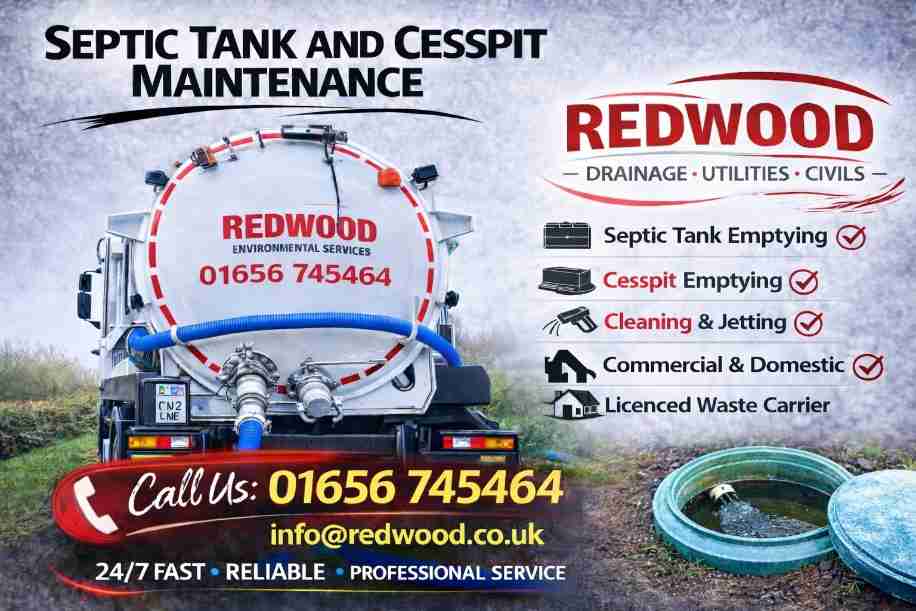
Septic Tank and Cess Pit Emptying, Maintenance, Repair on New Septic Tank Installation in Wales and England: What Is the Difference Between a Septic Tank and a Cess Pit?
If your property isn’t connected to a public sewer system, you likely rely on an on-site wastewater solution. Two common systems are septic tanks and cess pits (cesspools). While they both handle household wastewater, they work very differently — and choosing the right one can impact cost, maintenance, environmental safety, and legal compliance.
What Is a Septic Tank?
A septic tank is an underground wastewater treatment system commonly used in rural or suburban homes.
How It Works:
- Wastewater flows from your home into a underground tank.
- Solids settle at the bottom (forming sludge).
- Oils and grease float to the top (forming scum).
- The partially treated liquid (effluent) flows out into a drain field (leach field) where it is naturally filtered by soil.
Key Features:
- Separates solids and liquids
- Provides partial wastewater treatment
- Requires periodic pumping cleaning and emptying
- Environmentally safer when maintained properly
- Commonly approved installation

Pros:
- Better for the environment
- Longer lifespan
- Handles higher water usage
- Meets most health regulations
Cons:
- Higher installation cost
- Requires space for drain field
What Is a Cess Pit (Cesspool)?
A cess pit (or cesspool) is a simple underground pit that collects wastewater without treating it.
How It Works:
- Wastewater flows into a covered pit.
- Liquids seep into the surrounding soil.
- Solids remain in the pit and gradually build up.
- Unlike septic systems, cess pits do not separate or treat waste effectively.
Key Features:
- No internal treatment process
- No drain field
- Requires frequent emptying
- More prone to contamination issues

Pros:
- Lower initial installation cost
- Simple design
Cons:
- Can contaminate groundwater
- Fills up quickly
- Often illegal in new construction
- Higher long-term maintenance cost
Environmental & Legal Considerations
In many countries and regions, cess pits are being phased out because they pose a higher risk of groundwater contamination. Septic systems are generally the preferred and legally approved option for modern homes.
If you're buying an older property, it's important to check which system is installed — replacing a cess pit with a septic tank can be a worthwhile long-term investment.
Which One Should You Choose?
If you're installing a new system, a septic tank is almost always the better choice due to:
- Environmental safety
- Long-term reliability
- Regulatory approval
A cess pit may only be found in older homes or temporary setups.
When to Call Redwood Environmental Services Ltd.
- If you have sewerage backing up to your property
- If your tank is overflowing
- If your tank is leaking
- If you need your tank cleaning
- If you need your tank emptying
- If you need a repair to your tank
- If you have sewerage foul smells
- If you need a survey or inspection of your tank
Addressing these warning signs early can prevent your breaching Environmentemal pollution breaches and can avoid major repairs later.
Call us 24/7 on 01656 745464 for fast, reliable support"